
DPI vs sensitivity: what matters for competitive gaming
Dialing in your aim starts with understanding how mouse hardware and game software interact, so you can replicate pro-level consistency regardless of your setup.
Top wireless gaming mice for competitive play
| Product | Rating | Price | |
|---|---|---|---|
 Logitech G Pro X Superlight 2 The Precision Standard for Competitive FPS Gamers +HERO 2 sensor ensures accuracy+LIGHTFORCE hybrid switches improve durability -Premium price tag required | €91,18 | Buy → | |
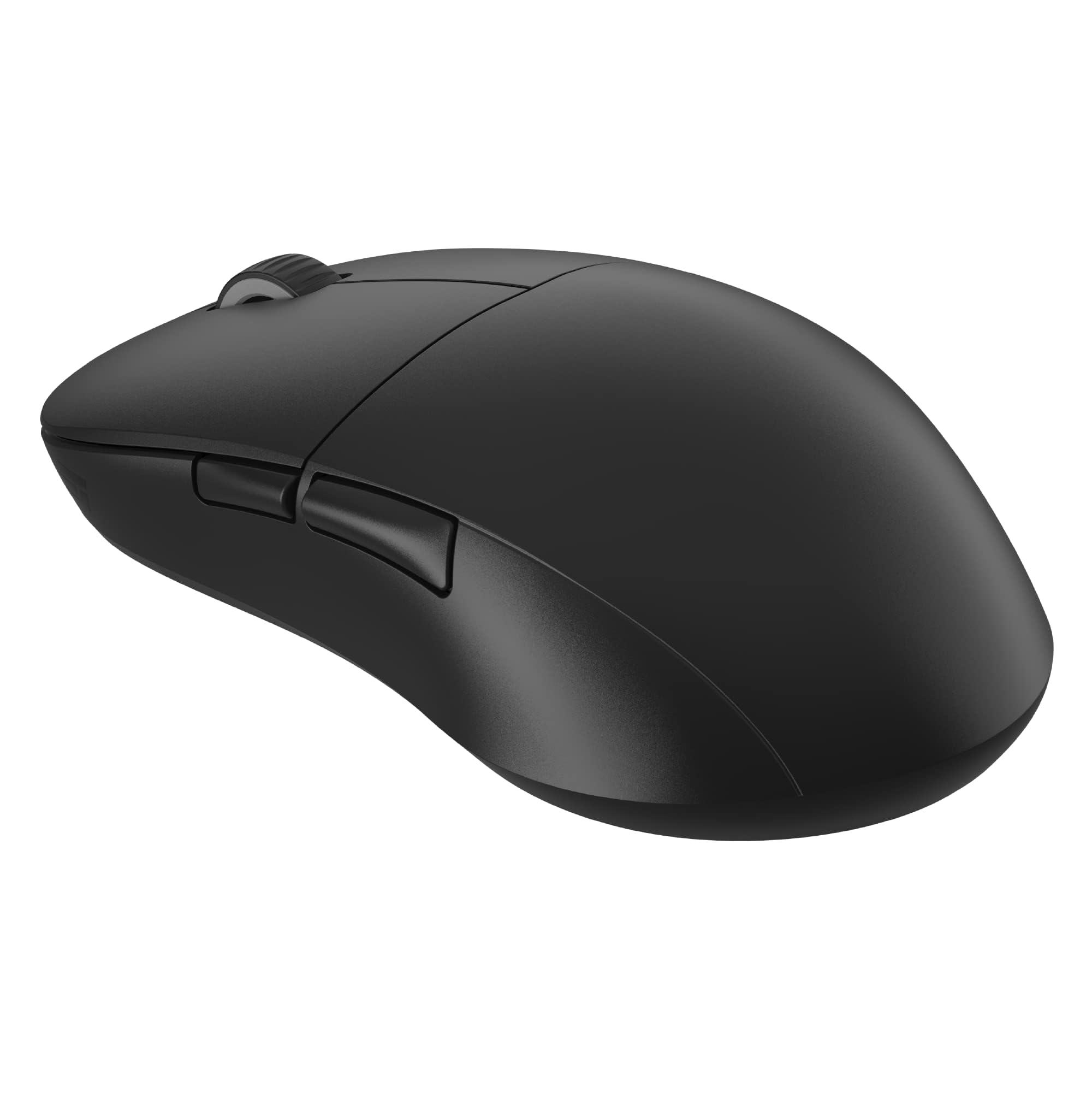 Endgame Gear Tofu 2 Sub-40g Ultra-Lightweight FPS Specialist +Extremely lightweight at just 39g+PixArt PAW3370 sensor ensures tracking -Lacks proprietary software features | €79,90 | Buy → | |
 Razer DeathAdder V3 Pro The Ergonomic Wireless Gaming Mouse Perfected +Proven right-handed ergonomic shape+Focus Pro 30K sensor tracks -Right-handed only design limits users | €80,33 | Buy → | |
 Zowie EC2-CW Top-Tier Wireless for Competitive FPS Players +Familiar ambidextrous silhouette for comfort+Zero-software latency for responsive clicks -Lacks customizable software features entirely | €70 | Buy → | |
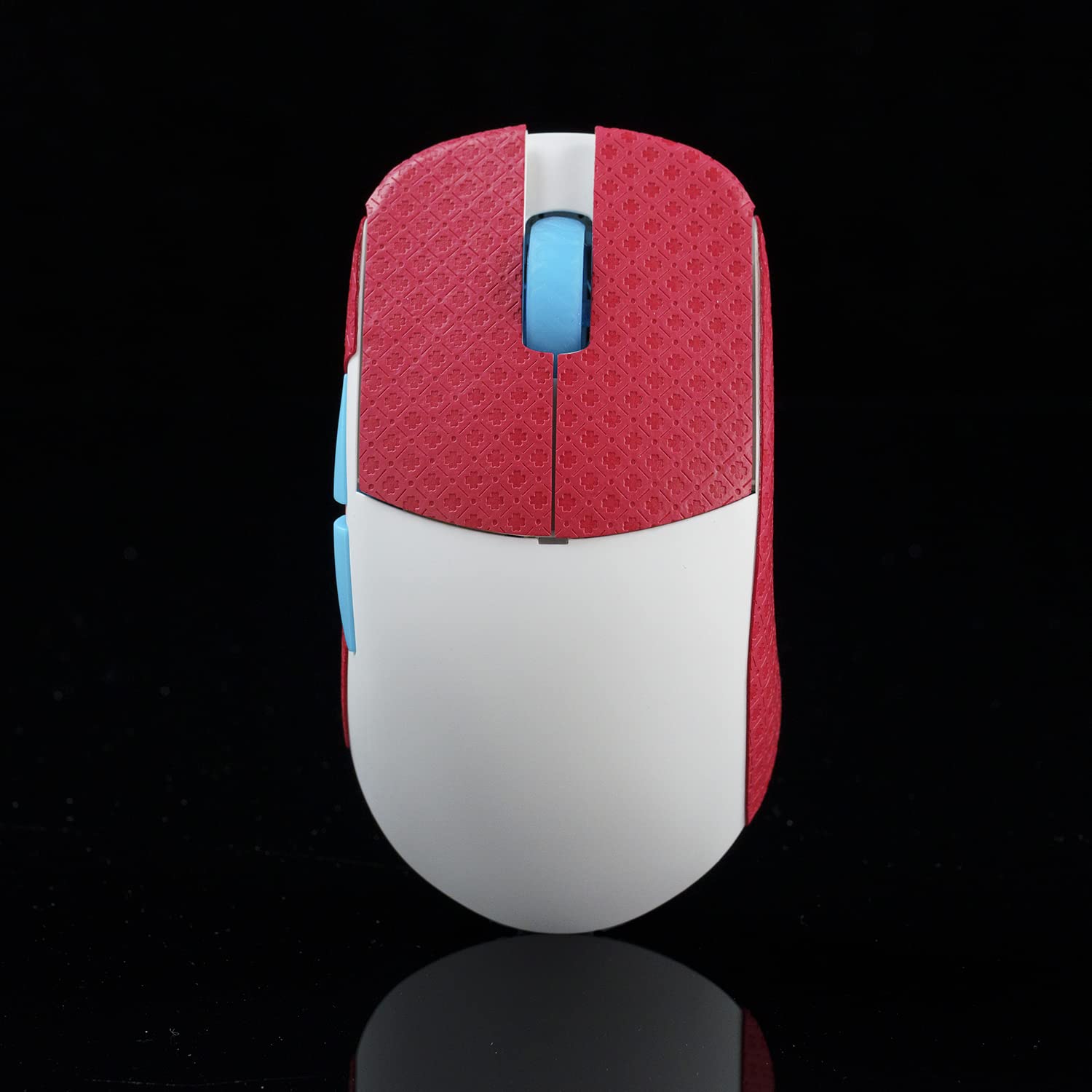 Lamzu Atlantis 2 Sub-€20 Flagship Wireless Performance +Flagship PAW3395 sensor for tracking+Mid-40g honeycomb PBT shell -Minimalist software ecosystem for users | €16,99 | Buy → | |
 Pulsar X2V2 Mini Sub-60g Precision Tool for Smaller Hands +Exactly 54g compact footprint+PAW3395 sensor supports 20kHz polling -Honeycomb shell requires regular cleaning | €9,49 | Buy → |
Our top picks at a glance
The Precision Standard for Competitive FPS Gamers
- HERO 2 sensor ensures accuracy
- LIGHTFORCE hybrid switches improve durability
- Refined matte finish improves grip
- Premium price tag required
- Symmetrical shape lacks ergonomic support
Sub-40g Ultra-Lightweight FPS Specialist
- Extremely lightweight at just 39g
- PixArt PAW3370 sensor ensures tracking
- Minimalist design reduces wrist fatigue
- Lacks proprietary software features
- Stripped-down build feels less durable
The Ergonomic Wireless Gaming Mouse Perfected
- Proven right-handed ergonomic shape
- Focus Pro 30K sensor tracks
- Gen-3 optical switches ensure longevity
- Right-handed only design limits users
- Slightly heavier at 63g
Top-Tier Wireless for Competitive FPS Players
- Familiar ambidextrous silhouette for comfort
- Zero-software latency for responsive clicks
- Tournament-grade durability survives heavy use
- Lacks customizable software features entirely
- Premium price positioning for market
Sub-€20 Flagship Wireless Performance
- Flagship PAW3395 sensor for tracking
- Mid-40g honeycomb PBT shell
- Excellent price-to-performance ratio for gamers
- Minimalist software ecosystem for users
- Exposed shell design collects debris
Sub-60g Precision Tool for Smaller Hands
- Exactly 54g compact footprint
- PAW3395 sensor supports 20kHz polling
- MagSpeed magnetic charging is convenient
- Honeycomb shell requires regular cleaning
- Tailored specifically for smaller hands

Ultra-lightweight Wireless Gaming for Speed and Agility
- Hollowed chassis keeps weight minimal
- PAW3395 optical sensor ensures precision
- Durable G-SOFT optical switches last longer
- Honeycomb shell collects dust easily
- Symmetrical shape lacks ergonomic support

Classic Ergonomic Shape Meets Wireless Freedom
- LIGHTFORCE hybrid switches reduce failures
- Extensive button layout for productivity
- Reliable LIGHTSPEED wireless connectivity
- Heavier than ultralight competitors
- Higher price point for users
What DPI actually means (and what it doesn't)
DPI stands for dots per inch, a measurement originally developed for print resolution that gaming peripherals adopted to describe optical and laser sensor scaling. In practical terms, it indicates how many discrete cursor positions the sensor reports for every physical inch the mouse travels across a surface. If a device is configured to 800 DPI, sliding it exactly one inch triggers 800 individual coordinate updates that travel to the operating system. This figure is strictly a multiplier; it does not measure tracking accuracy, surface sensitivity, or input latency. A persistent marketing misconception equates higher DPI with faster aiming or superior performance, but the raw number is simply a scaling factor. A sensor rated at 16,000 DPI and one capped at 400 DPI can deliver identical tracking fidelity if they share the same optical architecture and signal processing pipeline. The only difference is how much physical displacement is required to cross a given distance on screen. Treating the DPI figure as a quality tier ignores the engineering that actually dictates performance: consistent surface tracking, acceleration thresholds, spin-out limits, and how cleanly the sensor filters out microscopic hand tremors.
Competitive players across tactical shooters, arena titles, and fighting games overwhelmingly operate within the 400–1,600 DPI range, and the preference is entirely biomechanical rather than technical. Modern optical sensors can easily track beyond 25,000 DPI with zero acceleration, prediction, or tracking drop-off. The reason top-tier competitors avoid those upper limits is that high DPI amplifies every accidental micro-shift of the wrist, turning natural hand jitter into erratic crosshair movement. This makes pixel-perfect adjustments, slow tracking, and consistent flick recovery noticeably harder to execute. Lower DPI settings force players to rely on deliberate arm sweeps for large directional changes and controlled wrist rotations for fine tuning, which naturally filters out hesitation and builds repeatable muscle memory. Public tournament records and widely published sensor documentation consistently show that elite competitors cluster near the bottom of that spectrum. When you pair a moderate DPI with standard operating system pointer settings and disabled acceleration, the relationship between physical movement and on-screen response remains linear, predictable, and highly responsive to deliberate input.
Selecting an appropriate DPI setting comes down to how you interact with your hardware, your monitor resolution, and the pacing of the games you play. Players who compete in fast-paced arena shooters or strategy titles that demand rapid 180-degree turns often prefer 1,000–1,600 DPI to minimize the physical distance required to reposition their view. Those focused on tactical shooters, precision simulators, or games where crosshair placement dictates outcomes typically gravitate toward 400–800 DPI, as the slower on-screen response encourages controlled strokes and reduces overcorrection. It is equally important to separate DPI from polling rate, which measures how frequently the mouse reports its position to the computer (commonly 125 Hz to 1,000 Hz or higher). Polling rate governs communication delay, while DPI governs movement scale. Contemporary gaming mice handle both parameters independently, allowing you to maintain a low DPI for precision without sacrificing responsiveness. When evaluating hardware, prioritize models that offer native DPI steps in your preferred range rather than relying on driver-based interpolation. Interpolated DPI can introduce subtle timing inconsistencies because the software calculates the output instead of the sensor reporting it directly. Native sensor ranges guarantee that every coordinate update originates straight from the optical engine, preserving the clean input pipeline that consistent performance requires.
Treat DPI as a personal calibration setting, not a performance tier. Start at 800 DPI with your in-game sensitivity multiplier at 1.0, play several matches, and adjust in small increments based on how your crosshair tracks during flicks and sustained tracking shots. If you consistently overshoot targets or struggle to hold angle, drop the DPI by 100–200 points. If your turns feel sluggish or require awkward shoulder stretches, increase it slightly. Keep your operating system pointer speed at the middle position, disable any built-in acceleration features, and maintain a 1 relationship between physical movement and on-screen response. Once you land on a comfortable baseline, commit to it for at least two weeks to allow your neuromuscular system to adapt before making further adjustments. ::
In-game sensitivity vs DPI and the eDPI formula
Hardware DPI and in-game sensitivity operate on fundamentally different layers of the input pipeline, yet they are frequently treated as interchangeable dials. DPI, or dots per inch, is a hardware specification tied directly to the mouse sensor’s resolution and reporting behavior. It dictates how many raw coordinate reports the sensor transmits to the operating system for every physical inch of movement across a surface. In-game sensitivity, by contrast, is a software multiplier applied by the game engine after those raw reports have already been received. It scales the incoming data to determine how many degrees your camera, crosshair, or character rotates. Adjusting hardware DPI alters the raw data stream itself, which can trigger internal sensor processing, firmware smoothing, or coordinate interpolation depending on the chip’s design. Tweaking in-game sensitivity simply applies a mathematical scaling factor to data the engine has already accepted, leaving the underlying sensor behavior completely untouched. Recognizing this distinction is the first step toward building a predictable aiming setup.
To bridge the gap between hardware reporting and software scaling, competitive communities rely on effective DPI, universally abbreviated as eDPI. The calculation is mathematically straightforward: eDPI equals your sensor’s DPI multiplied by the game’s internal sensitivity setting. For instance, running a mouse at 800 DPI paired with an in-game sensitivity of 1.5 yields an eDPI of 1,200. Conversely, 1,600 DPI combined with a sensitivity of 0.75 produces the exact same 1,200 eDPI. Mathematically, the physical distance required to traverse a given number of screen degrees remains identical in both scenarios. This equivalence is precisely why eDPI has become the standard metric for tracking aim consistency. When players exchange settings in community forums or tournament brackets, quoting raw DPI and in-game sensitivity separately is functionally useless because every game engine scales its multiplier differently. A sensitivity of 2.0 in one title might feel drastically heavier than 2.0 in another, but converting both configurations to eDPI neutralizes engine-specific scaling and reveals the actual physical effort required to execute a turn.
The gaming community standardized on eDPI because muscle memory is built on physical distance, not software multipliers. Your nervous system adapts to moving the mouse two inches to execute a 180-degree spin, regardless of whether your sensor is reporting at 400 DPI or 3,200 DPI. By locking onto a consistent eDPI, players can switch between titles without recalibrating their swing mechanics, tracking discipline, or flick precision. This consistency is particularly critical in competitive shooters where split-second motor execution overrides conscious calculation. Aggregated data from professional player settings consistently shows that elite competitors cluster within specific eDPI ranges rather than chasing arbitrary DPI numbers. Low eDPI setups typically fall between 600 and 1,000, demanding larger arm movements and prioritizing fine control for long-range tracking. High eDPI configurations generally range from 1,600 to 3,000, favoring wrist-based aiming and rapid directional changes. Standardizing on eDPI allows players to identify their optimal mechanical range and replicate it across any title, regardless of how the developer structured their internal sliders.
- Predictable cross-game translation: Muscle memory transfers cleanly between titles without guesswork
- Neutralizes engine scaling differences: Removes confusion caused by developers using arbitrary multiplier values
- Facilitates objective benchmarking: Enables direct comparison of professional settings and community benchmarks
- Ignores hardware reporting nuances: Does not account for sensor smoothing, polling rate interactions, or firmware interpolation
- Requires manual calculation: Players must convert settings manually or rely on third-party converters
- Cannot compensate for poor engine implementation: High in-game multipliers may still amplify input jitter in poorly optimized games ::
Despite the mathematical equivalence, hardware DPI and in-game sensitivity do not behave identically under the hood. Sensor resolution directly impacts sub-pixel accuracy and input latency. Modern optical gaming mice typically operate best between 400 and 1,600 DPI, where the sensor can report movement with high precision without triggering firmware-based smoothing or data interpolation. Pushing DPI past 3,200 often forces the sensor to interpolate between raw reports, introducing microscopic timing variance that can degrade tracking consistency during fast movements. Conversely, relying heavily on high in-game multipliers to compensate for a low DPI setting can amplify input jitter, especially in engines that apply linear scaling without anti-aliasing filters. Additionally, polling rate interacts with DPI to determine minimum movement increments. A 1,000 Hz polling rate paired with 800 DPI yields a minimum movement step of approximately 0.00125 inches, while doubling the DPI halves that step size, effectively increasing control resolution. Understanding these mechanical boundaries ensures you are optimizing the actual data pipeline rather than chasing a number.
| Model | Price | Rating |
|---|---|---|
| A | $99 | 4.5 |
| B | $129 | 4.7 |
| C | $79 | 4.2 |
| :: |
When configuring a new setup, start by establishing a baseline physical distance for a common reference, such as a 90-degree turn or a 180-degree spin. Adjust your DPI to fall within the sensor’s optimal reporting window, then calculate the exact in-game sensitivity required to match your target eDPI. This method strips away guesswork and aligns your hardware capabilities with your mechanical preferences. Many players initially gravitate toward high DPI settings under the assumption that higher numbers equal better precision, but precision is determined by how finely the engine translates movement, not how many reports the sensor generates. By anchoring your configuration to eDPI, you create a reproducible baseline that survives game patches, engine updates, and hardware swaps. The goal is not to chase a specific number, but to build a transparent relationship between physical movement and on-screen response.
Convert Your Current Settings to eDPI
Finding your ideal sensitivity for FPS games
Sensitivity is the bridge between your physical input and on-screen execution, but treating it as a single number can lead to inconsistent performance. The industry standard for benchmarking is effective DPI (eDPI), calculated by multiplying your mouse's hardware DPI by your in-game sensitivity multiplier. eDPI normalizes settings across different mice and games, providing a reliable metric for comparing your configuration against proven performance baselines. Researching professional player settings and community data reveals that top-tier competitors rarely choose sensitivity arbitrarily; instead, they converge around specific eDPI ranges that optimize the balance between precision and speed for their preferred genre and biomechanics.
Different shooter genres impose distinct demands on camera control, which directly influences optimal eDPI ranges. Tactical shooters prioritize deliberate crosshair placement and micro-adjustments, while battle royale and arena titles often require faster rotation speeds to handle dynamic movement and chaotic engagements. Understanding these genre-specific baselines helps you start your tuning process from a data-informed position rather than guessing.
| Game Genre | Typical eDPI Range | Common Aiming Style |
|---|---|---|
| Tactical Shooters | 700 – 1,200 | Arm/Wrist hybrid |
| Battle Royales | 1,500 – 2,500 | Wrist/Dominant finger |
| Arena Shooters | 2,000 – 3,000+ | High-speed wrist |
- Establish your baseline eDPI: Set your mouse DPI to a hardware standard like 800 or 1600. Calculate the in-game sensitivity required to land your eDPI within the genre-appropriate range from the table above. For example, at 800 DPI, an eDPI of 1,000 requires an in-game sensitivity of 1.25.
- Execute the flick consistency drill: Aim at a stationary target, pull your crosshair away to a fixed distance, and flick back. The objective is precision, not speed; you must land on the target repeatedly. If you consistently overshoot, reduce sensitivity by 10–20%. If you undershoot or struggle to connect on distant targets, increase sensitivity incrementally. Adjust in small steps to isolate changes in feel.
- Assess tracking smoothness: Engage a moving target and focus on keeping your crosshair locked without jitter. High sensitivity often amplifies hand tremors, resulting in shaky tracking, while excessive low sensitivity can cause "stuttering" as you scramble to maintain pace with fast enemies. Your ideal setting produces fluid motion while retaining the ability to react to sudden directional changes.
- Validate under pressure: Transition to a high-stakes environment like a competitive deathmatch or bot rush. Real gameplay stress exposes sensitivities that feel comfortable in isolation but fail during intense reaction scenarios. Commit to the setting that feels natural after 10–15 minutes of sustained play, allowing muscle memory to adapt to the new parameters. ::
Adjusting sensitivity involves navigating clear trade-offs between stability and responsiveness. Lower eDPI configurations generally reduce the impact of micro-jitters and hand tremors, which is critical for holding angles and landing precise shots in tactical scenarios. However, low sensitivity demands more desk space and physical effort for 180-degree turns, potentially causing fatigue during long sessions or limiting your ability to react to flankers. Higher eDPI setups enable rapid camera rotation and easier peripheral awareness but require exceptional hand control to maintain accuracy. Players with smaller desks or limited range of motion may find higher sensitivity necessary, though they must develop the discipline to negate the inherent instability of high-speed inputs.
Your physical environment and grip style further constrain your viable sensitivity range. Measure your available desk surface and ensure your mousepad provides sufficient clearance for your turning radius. If your optimal eDPI requires a rotation that collides with your keyboard or monitor, you must either increase sensitivity or reconfigure your workspace. Grip style also correlates with sensitivity preferences; palm grip users often gravitate toward lower settings to leverage the stability of a larger contact surface, while fingertip grip users may prefer higher sensitivities to maximize dexterity and rapid micro-adjustments. There is no universal correct approach; the goal is to align your sensitivity with your biomechanics and setup so aiming feels like a natural extension of your intent.
Eliminate variables that distort sensitivity perception by ensuring mouse acceleration is disabled in both operating system settings and mouse driver software. Acceleration links cursor speed to movement velocity, which breaks the muscle memory required for consistent aiming. Without disabling acceleration, your body learns multiple sensitivities based on movement speed rather than a fixed distance-to-rotation ratio. Industry research consistently identifies raw input as the gold standard for competitive play, where cursor movement corresponds one-to-one with physical mouse movement. This reliability ensures that the benchmarking steps yield repeatable results over time.
Finally, be aware that while eDPI determines speed, the split between DPI and in-game sensitivity can affect input behavior in certain titles. Some games apply acceleration or smoothing algorithms differently depending on the DPI setting, even if the eDPI remains constant. Technical analysis suggests that higher DPI settings (such as 1600 or 3200) can offer slightly higher resolution and lower latency on modern hardware compared to legacy settings like 400 or 800 DPI, provided the in-game sensitivity is adjusted to match your target eDPI. Pairing a DPI of 800 or 1600 with a complementary in-game multiplier generally ensures optimal hardware performance without sacrificing the control established during your tuning process.
Find the best mice for your sensitivity needs
Disclosure: As an affiliate partner, we may earn a commission from qualifying purchases through links on this page. This does not influence our editorial content or the advice provided.
Does max DPI matter if you game at 800?
The marketing push for 26,000, 30,000, or even 40,000 DPI sensors is almost entirely disconnected from how competitive gaming actually works. DPI stands for dots per inch, which simply measures how many discrete signals the sensor reports for every inch of physical mouse movement. When you run your in-game sensitivity at 800 DPI, you are intentionally limiting that ratio to prioritize microscopic control over rapid sweeps. Cranking the DPI setting higher without adjusting your in-game multiplier doesn’t make the sensor “more precise”; it just makes the cursor travel further per inch, which defeats the purpose of low-sensitivity aiming. The industry’s race toward astronomical DPI numbers is driven by spec-sheet inflation and feature parity rather than gameplay necessity. Modern competitive titles operate on raw input anyway, meaning they read the sensor’s native data directly and apply your in-game multiplier digitally. At that point, peak DPI becomes a vanity metric that offers zero competitive advantage.
What actually separates a responsive, trustworthy mouse from a sluggish one is sensor architecture and data handling, not the maximum sensitivity ceiling. High-end optical sensors differ in how they manage lift-and-strike distance, angle snapping, and maximum tracking speed. A sensor marketed at 16,000 DPI with clean, unaltered data reporting will consistently outperform a 26,000 DPI sensor that relies on software smoothing to mask tracking inconsistencies. Angle snapping, also known as quantization error, occurs when the sensor rounds fractional pixel movements to whole numbers. At 800 DPI, even a half-pixel rounding error becomes visually apparent as stuttering or uneven crosshair movement. Premium sensors minimize this by using higher internal resolution counters and more precise lens assemblies, ensuring that tiny physical adjustments translate to equally tiny digital movements without artificial correction. Lift-and-strike distance matters just as much; it dictates how high you can lift the mouse before the optical tracker disengages. Adjustable lift-and-strike settings let players perform quick crosshair resets without accidental cursor drift, a necessity for tactical shooters and fighting games.
The real determinants of aim feel come down to three interconnected variables: acceleration, smoothing, and polling rate. Acceleration in gaming refers to how consistently the cursor responds to physical speed versus distance. Modern competitive games bypass Windows pointer acceleration entirely, relying on raw input to maintain a 1 relationship between pad real estate and on-screen movement. Smoothing, on the other hand, is the process of averaging consecutive data points to eliminate noise. While light sensor-level smoothing can clean up minor tracking artifacts, aggressive software-based smoothing introduces micro-input lag by delaying the report of each frame. At low DPI settings, even a few milliseconds of interpolation delay feels like mushy, disconnected control. Polling rate measures how frequently the mouse reports its position to the system, traditionally standardized at 1000Hz (one report per millisecond). Newer firmware pushes 4000Hz or 8000Hz polling, which theoretically reduces latency further. However, the diminishing returns are steep: the gap between 1000Hz and 4000Hz is measurable on an oscilloscope but rarely perceptible in actual gameplay, and higher polling rates increase CPU utilization, wireless bandwidth consumption, and battery drain.
If you compete at 800 DPI, your buying priority should shift from peak sensitivity to data cleanliness and consistent reporting. Look for mice that advertise low quantization error, adjustable lift-and-strike thresholds, and firmware-level controls for smoothing and polling rates. The trade-offs are straightforward: higher polling rates demand more robust microcontrollers and can run warmer or shorten battery life, while ultra-lightweight chassis designs often sacrifice durability or cable strain relief to shave grams. Sensor quality also ties directly to switch longevity and internal PCB layout; poorly routed signal paths can introduce electromagnetic interference that degrades tracking over time. Ultimately, running at 800 DPI is a deliberate choice to maximize precision on a given desk space. The sensor’s job is simply to report that movement faithfully, without rounding, delaying, or artificially averaging your inputs. When evaluating specs, ignore the headline DPI number and focus on the engineering choices that keep your crosshair exactly where you intend it.
- Raw Input vs OS Scaling — How games handle sensitivity data and why bypassing Windows acceleration is mandatory for consistent aim.
- Lift-and-Strike Distance — The height threshold where tracking disengages, crucial for crosshair resets without unwanted cursor drift.
- Angle Snapping & Quantization — How sensors round fractional pixel movements at low DPI and what to watch for in sensor specs.
- Polling Rate Diminishing Returns — Why 1000Hz remains the sweet spot for most players despite 4K/8K marketing pushes. ::
Recommended settings for popular titles
Effective Dots Per Inch (eDPI) combines your mouse's hardware DPI and in-game sensitivity multiplier to define your true cursor movement ratio. Pro player databases consistently show that optimal eDPI varies drastically by genre, driven by engine mechanics, tick rates, and specific aiming demands. Understanding these baselines helps you calibrate your setup effectively, regardless of the hardware you choose. The following breakdown relies on aggregated data from thousands of professional matches and player profiles tracked across resources like the Mouse Sensitivity database to highlight where the competitive meta settles and why.
Counter-Strike 2
Counter-Strike 2 maintains a reputation for demanding lower sensitivities to maximize micro-adjustments during spray transfers and long-range flicks. Public data from pro player databases indicates a median eDPI range between 800 and 1,600, with a heavy concentration below 1,200. This trend persists because CS2's engine prioritizes raw input for precision aiming, stripping out software acceleration that could introduce inconsistency. The game's server architecture means input registration is binary and unforgiving; lower eDPI allows players to leverage fine motor control in the fingers for crosshair placement rather than relying on broad arm swings. While CS2 introduced a new sub-tick system to improve movement responsiveness, the aiming philosophy remains rooted in static crosshair placement, reinforcing the community preference for slower, more deliberate tracking that minimizes overshooting targets. Players transitioning from higher-sensitivity shooters often report a steep learning curve here, as the engine rewards consistency and discipline over raw speed.
The relationship between DPI and sensitivity within this eDPI range also matters to some players. Data shows a split between those who run 400 DPI with higher sensitivity and those who use 800 DPI with lower sensitivity. While the effective movement is identical, some players report a subjective difference in smoothness or input polling behavior, though the engine treats raw input uniformly. This psychological factor often influences hardware choices, but the eDPI remains the governing metric for performance. The sub-tick updates in CS2 aim to reduce input delay, yet the core aiming loop remains unchanged; pros continue to favor settings that allow for sub-pixel adjustments without the risk of erratic cursor jumps, reinforcing the low eDPI standard. Most elite competitors use their eDPI to ensure that a single mouse movement corresponds to a predictable, small on-screen distance, making it easier to hold angles through smoke edges or align headshots through pixel-perfect gaps.
Valorant
Valorant's aiming engine shares DNA with Source but operates on a distinct input model that slightly broadens the acceptable eDPI window. Pro player statistics typically show a median eDPI between 1,000 and 2,000, with the most common cluster sitting just above 1,200. The game's fixed tick rate and deterministic hit registration require precise crosshair alignment, yet the movement mechanics and smaller hitboxes encourage slightly faster flick speeds than CS2. Valorant's engine handles raw input strictly, meaning your eDPI is exactly what you set without hidden variables, but the recoil patterns demand consistent muscle memory that can be easier to maintain at moderate sensitivities. Data suggests that players who frequently engage in hip-fire mechanics or play duelists may drift toward the upper end of this range to secure quicker 180-degree turns, while sentinels and controllers often stick to lower settings for utility aiming precision.
Engine behavior in Valorant is particularly strict regarding input interpretation. The game ignores mouse acceleration software entirely, relying solely on the raw signal from the sensor. This means your eDPI is a fixed value that does not fluctuate based on speed, a feature that top players appreciate for consistency. However, this also means that any jitter or noise in the sensor signal at very low DPIs can be more apparent, which is why many pros in the 1,000–2,000 eDPI range prefer a base DPI of 800 or higher to ensure clean signal processing. The 64-tick servers in most regions also dictate how movement is processed; while aiming is client-side, the tick rate affects how your crosshair snaps to targets during movement. High-level data suggests that players who rely on peeking mechanics often fine-tune their eDPI to optimize the trade-off between turn speed during a counter-strafe and the precision needed to hold angles immediately after. This nuance makes Valorant's optimal eDPI highly dependent on playstyle, not just hero choice, and emphasizes the importance of choosing a setting that feels stable during rapid direction changes.
Overwatch 2
Overwatch 2 breaks the mold of low-sensitivity shooters, favoring higher eDPI ranges to accommodate tracking-heavy combat and dynamic hero abilities. Public databases reveal a median eDPI spanning 2,000 to 4,000, with many tracking-focused players exceeding 3,500. This shift is necessitated by the engine's interpolation and the game's high-speed movement mechanics; heroes like Tracer or Genji require players to lock onto targets moving at high velocities, often necessitating fluid arm movements that are impractical at low sensitivities. Unlike Source or the R6 engine, Overwatch 2's aiming feels smoother, allowing for comfortable tracking at higher speeds without the jitter often found in low-sensitivity setups. Furthermore, the diversity of the hero roster influences settings; while sniper classes like Widowmaker still benefit from lower eDPI for precision, the overall meta trends higher to support the majority of damage and tank roles.
The engine's handling of movement and collision detection further drives the high eDPI trend. Overwatch 2 features rapid acceleration and deceleration for heroes, meaning you can change direction almost instantly. At low sensitivities, making a sharp turn after a dash or blink can result in over-rotation or require excessive desk space, which interrupts flow. High eDPI allows for these corrective micro-movements without losing target focus. Additionally, the game's interpolation system smooths out target positions, making tracking at higher sensitivities feel more natural than in tick-based shooters. Pro player profiles often reveal significant divergence based on main hero; a Sigma main might run 2,200 eDPI for tracking projectiles, while a Widowmaker main might drop to 1,800 for flick accuracy. This flexibility means Overwatch 2 players should view eDPI as a flexible tool rather than a fixed constant, adjusting based on the specific aiming demands of the hero pool they queue with. The consensus is that if you primarily play tracking heroes, err on the higher side of the range, and only lower your settings if precision aiming feels unstable.
Calibration context
Calibrating your eDPI requires experimentation beyond these baselines. Personal factors like mousepad size, arm vs. wrist aiming style, and individual motor control play significant roles. Use these ranges as a starting point, then adjust in small increments to find the sweet spot where your flicks land consistently and tracking feels natural. The table below outlines a typical hardware profile that supports these settings effectively.
| Spec | Value |
|---|---|
| Weight | 250 g |
| Max DPI | 26,000+ |
| Polling Rate | 1000 Hz |
| Sensor Type | Optical |
| :: |
Common questions about DPI and sensitivity
Frequently asked questions
What is the highest DPI I actually need?
DPI, or dots per inch, measures the resolution of the sensor's tracking, indicating how many counts the mouse reports per inch of physical movement. While modern flagship sensors advertise caps ranging from 26,000 to 40,000 DPI, these figures are largely marketing differentiators rather than performance metrics. For virtually all gaming scenarios, including use on high-resolution 4K or 8K displays, a DPI range of 4,000 to 8,000 is more than sufficient. Pushing beyond this threshold does not improve aiming precision; instead, it can sometimes increase electrical noise in the signal path or raise power consumption without offering any perceptible benefit to the user.
The real value in high-cap sensors lies in their raw tracking quality, low jitter, and ability to maintain high polling rates at standard DPI settings, not the maximum number on the spec sheet. Some sensors with higher caps may offer finer granularity in in-game sensitivity tuning, which can be helpful if a game's sensitivity slider is coarse, but this is a diminishing return. Most modern titles provide granular enough sliders that a 800 to 1600 DPI baseline is optimal. When selecting a mouse, prioritize sensors known for clean, responsive tracking at your preferred DPI range rather than chasing the highest possible cap, as lower-DPI performance directly correlates to your daily aim consistency. ::
Frequently asked questions
How do I match sensitivity across different games?
Consistency across titles relies on calculating Effective DPI (eDPI), which is your mouse DPI multiplied by your in-game sensitivity multiplier. By maintaining a constant eDPI, you ensure that a specific physical wrist flick covers the same angular distance regardless of the game you are playing. Many experienced players standardize on 800 DPI as a baseline; this minimizes rounding errors in older game engines that process mouse input in fixed-angle increments, though modern engines have largely mitigated this issue. To achieve precise parity, use community-calculated sensitivity converters that account for specific engine quirks, such as angle snapping differences or unique raw input handling.
Beyond the math, configuration matters. Always ensure Windows mouse settings are set to the 6/11 pointer speed with "Enhance Pointer Precision" disabled to prevent operating system-level acceleration from interfering with your calibration. Additionally, verify that individual games have "Raw Input" enabled in their settings, as some titles may default to reading mouse data through Windows, which can introduce unwanted smoothing or acceleration. If a game lacks a raw input toggle, you may need to adjust your mouse DPI slightly to compensate for the engine's processing behavior. Keeping a spreadsheet or note of your eDPI and the specific in-game values for each title is the most reliable way to maintain muscle memory as you rotate between games. ::
Frequently asked questions
What is sensor smoothing and should I disable it?
Sensor smoothing is a digital processing technique where the mouse firmware averages recent movement data points to produce a steadier cursor trajectory. While this reduces visual jitter caused by hand tremors or sensor noise, it inherently introduces latency and can make precise flicks feel "mushy" or delayed, as the mouse waits for additional data to calculate the average. In competitive gaming, raw input is preferred because it delivers the immediate, unfiltered response required for split-second corrections. The trade-off is clear: smoothing sacrifices responsiveness for cursor stability, which is detrimental in fast-paced shooters or tactical games where reaction time is critical.
Most modern flagship sensors operate with zero smoothing by default, but budget models or mice with proprietary software may include smoothing options or apply hidden processing. Check technical breakdowns from reputable tracking specialists to verify a sensor's smoothing behavior before purchasing. If your mouse software offers a smoothing toggle, ensure it is turned off to prioritize responsiveness. Be aware that enabling higher polling rates, such as 4000Hz or 8000Hz, can sometimes make natural hand jitter more visible, tempting users to enable smoothing; however, the correct solution is to improve your hand stability or accept the raw input, as adding smoothing will increase latency and degrade aim precision. ::
Frequently asked questions
Does wireless latency affect competitive aim?
Advances in proprietary wireless protocols have eliminated any meaningful latency gap between wired and wireless mice for competitive play. Modern gaming wireless standards report latencies often below 1.2 milliseconds, which is imperceptible to human reaction times and functionally identical to the ~1 millisecond latency of a high-quality wired connection. Early wireless mice suffered from noticeable input lag, but current technology uses optimized RF transmission and efficient signal processing to ensure data reaches the PC instantly. For competitive aim, wireless performance is indistinguishable from wired, provided the mouse uses a dedicated gaming protocol rather than standard Bluetooth, which is unsuitable for fast-paced gaming due to higher latency and lower polling rates.
While latency is no longer a concern, consistency and interference remain factors. Ensure the USB receiver is placed close to the PC to avoid signal obstruction from the case or peripherals. Be mindful of USB 3.0 ports, which can generate radio frequency interference affecting 2.4GHz wireless signals, potentially causing dropped frames or jitter; using a USB 2.0 port or a two-meter extension cable for the receiver is a proven mitigation strategy. Additionally, check for "battery saver" or "eco" modes in your mouse software, as these may increase latency by reducing polling rates to extend battery life. For competitive play, always use the standard performance mode and keep the mouse charged to avoid any throttling or connection drops during critical moments. ::
Frequently asked questions
Are DPI shift buttons worth using in competitive play?
DPI shift buttons allow players to temporarily boost sensitivity with a side button press, a feature often used by low-DPI players to execute rapid turns without lifting the mouse. While convenient for general navigation or productivity, these buttons introduce significant risks in competitive scenarios where muscle memory and consistency are paramount. Accidental activation can cause catastrophic overshooting during critical engagements, and the cognitive load of managing a dynamic sensitivity state can interfere with flow and reaction consistency. Most professional players avoid DPI shift buttons, preferring static sensitivity to maintain a reliable reference point for every movement, ensuring that aim remains predictable under pressure.
If you are considering using a DPI shift, weigh the convenience against the risk of accidental presses. Some mice offer "smart" DPI shift implementations that only activate when a specific button is held, reducing the chance of accidental triggers, but this still adds complexity to your input scheme. For competitive FPS or tactical games, the consensus is that consistency outweighs convenience; remapping the DPI shift button to a non-critical function or disabling it entirely eliminates the variable. If you rely on a DPI shift for low-DPI gameplay, practice extensively to build the muscle memory of when to engage it, and ensure the button's placement is ergonomic enough to avoid unintended contact during standard aiming motions. ::